
Table of Contents
Publicly recognized individuals exist within structured identity frameworks that shape how they are understood and remembered. Celebrity branding refers to the coherent identity system that develops around famous figures, creating recognizable and consistent public identities that persist across contexts and time.

Understanding celebrity branding requires examining how identity coherence develops in public visibility contexts. This phenomenon concerns the formation and maintenance of unified identity structures rather than individual characteristics or commercial activities.
What “Celebrity Branding” Means

Celebrity branding describes the structured identity framework that defines how publicly recognized individuals are perceived as coherent entities. This concept addresses the formation of unified, recognizable identity patterns that characterize famous figures in public consciousness.
The term encompasses how disparate public appearances, communications, and associations coalesce into unified identity structures. Celebrity branding represents the organizing framework that allows audiences to perceive celebrities as consistent, identifiable individuals across varied contexts.
Branding in this context refers to identity distinctiveness and coherence rather than commercial activities. The concept borrows from identity formation theory to describe how public figures develop recognizable identity structures.
Celebrity branding functions as a cognitive organizing framework for audiences. It provides the structure through which audiences make sense of celebrity-related information and form coherent impressions of public figures.
The phenomenon emerges from the interaction between celebrity public presence and audience interpretation. Branding develops through processes involving both celebrity self-presentation and audience meaning-making.
Celebrity branding exists as a feature of public visibility contexts. When individuals become widely recognized, conditions emerge for identity coherence to develop into structured branding patterns.
Celebrity Branding Versus Public Image

Celebrity branding and public image represent related but distinct concepts. Understanding their differences clarifies what branding specifically involves.
Public Image Characteristics
Public image refers to the general impression or perception that audiences hold of celebrities. It describes how celebrities are viewed without necessarily implying structured identity coherence.
Public image may be fragmented or inconsistent. Audiences may hold varied impressions of celebrities that do not cohere into unified identity structures.
Public image responds to individual events and appearances. Specific occurrences may affect public image without necessarily affecting underlying identity structure.
Branding as Structure
Celebrity branding involves deeper identity structure than surface impression. Branding provides the framework that organizes and gives meaning to various public appearances and associations.
Branding implies coherence that public image does not require. A celebrity brand represents a unified identity system rather than accumulated impressions.
Branding provides stability that image may lack. Identity structure persists through individual events that might affect surface perceptions without altering fundamental branding.
Relationship Between Concepts
Public image operates within branding frameworks. Surface perceptions are interpreted through underlying identity structures that branding establishes.
Branding shapes how image information is processed. Audiences interpret celebrity appearances and actions through the lens of established brand identity.
Image may reinforce or challenge branding. Consistent image reinforces brand identity while inconsistent image may create tension with established branding.
Core Elements of Celebrity Branding
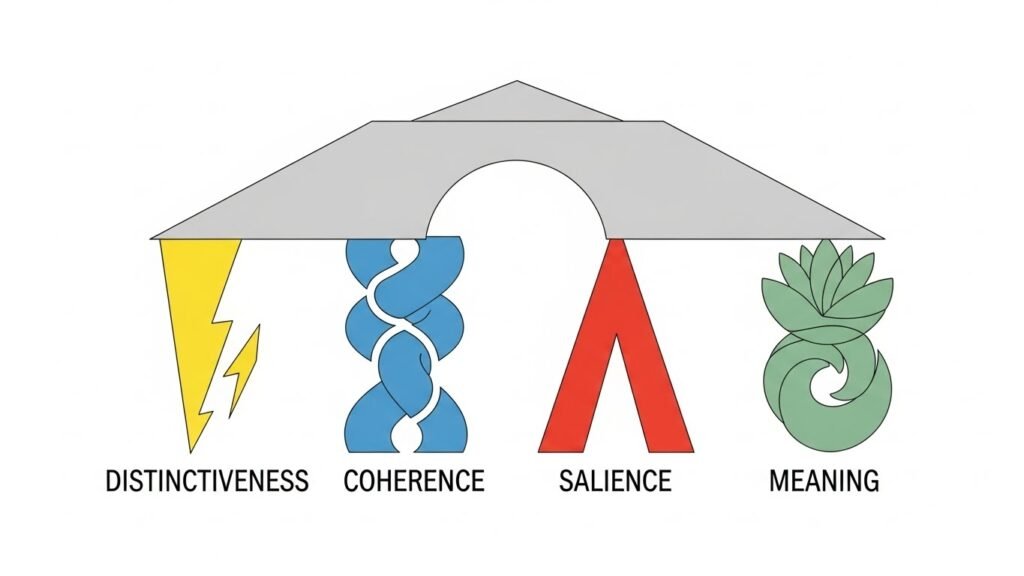
Celebrity branding comprises identifiable elements that together form coherent identity structures. Understanding these elements reveals branding composition.
Distinctiveness
Distinctiveness involves the unique characteristics that differentiate one celebrity brand from others. Brand identity requires recognizable differentiation that makes the celebrity distinguishable.
Distinctiveness may derive from various sources including presentation style, association patterns, or characteristic expression modes. What creates distinctiveness varies but distinctiveness itself remains essential.
Without distinctiveness, coherent branding cannot develop. Identity structure requires differentiation that allows audiences to recognize and categorize the celebrity.
Coherence
Coherence involves the internal consistency of brand identity elements. Different aspects of celebrity public presence must align sufficiently to form unified identity.
Coherence does not require uniformity across all dimensions. Some variation is compatible with coherence if core identity elements remain consistent.
Coherence enables recognition across contexts. When brand elements cohere, audiences can recognize the same celebrity identity in varied settings.
Salience
Salience concerns the prominence and memorability of brand identity. Effective branding involves identity elements that register with audiences and remain accessible in memory.
Salient brand elements stand out from general information. They capture attention and persist in audience awareness.
Salience determines brand accessibility. How readily audiences can recall and recognize brand identity depends on element salience.
Meaning
Meaning involves the significance and associations that brand identity carries. Celebrity branding includes the meanings that audiences attach to celebrity identity.
Meaning extends beyond descriptive characteristics. What the celebrity represents, symbolizes, or suggests constitutes meaningful brand content.
Meaning develops through association patterns. Accumulated associations build the meaning dimension of celebrity branding.
Consistency and Identity Recognition

Consistency plays a central role in celebrity branding by enabling recognition across varied contexts. Understanding consistency reveals how branding creates stable identity.
Cross-Context Recognition
Consistent branding enables audiences to recognize celebrities across different appearance contexts. The same identity structure manifests recognizably in varied settings.
Recognition depends on consistent core elements. When fundamental brand characteristics remain stable, audiences can identify the celebrity regardless of context variation.
Cross-context recognition supports brand strength. Identity that remains recognizable across contexts becomes more firmly established in audience awareness.
Temporal Consistency
Branding involves consistency across time as well as context. Identity structure maintains stability through temporal changes in appearance or activity.
Temporal consistency allows accumulated exposure to build coherent brand identity. Consistent identity across time enables exposure accumulation rather than fragmentation.
Some temporal evolution is compatible with consistency. Brand identity may develop while maintaining core continuity that supports ongoing recognition.
Consistency Thresholds
Branding requires sufficient consistency without demanding perfect uniformity. Some variation is compatible with coherent identity while excessive variation disrupts branding.
Consistency thresholds may vary across brand elements. Core elements may require greater consistency than peripheral aspects.
Understanding consistency thresholds reveals tolerance for variation. Branding can accommodate some inconsistency while still maintaining recognizable identity structure.
Celebrity Branding Across Different Media

Celebrity branding manifests through various media channels. Understanding cross-media branding reveals how identity structure operates across communication contexts.
Media-Specific Expression
Different media channels express brand identity through different means. Visual media emphasize appearance dimensions while verbal media emphasize expression patterns.
Media-specific expression means identical brand identity manifests differently across channels. The underlying identity remains consistent while expression adapts to media characteristics.
Understanding media-specific expression reveals branding flexibility. Coherent identity can accommodate varied expression modes appropriate to different media.
Cross-Media Coherence
Despite media-specific variation, brand identity maintains coherence across channels. Core identity elements remain recognizable regardless of which media channel presents them.
Cross-media coherence requires translation of identity across expression modes. The same brand identity must be expressible through different media characteristics.
Coherence across media strengthens overall branding. Identity that remains consistent across multiple media channels becomes more firmly established.
Media Channel Interaction
Different media channels interact in building brand identity. Exposure through one channel affects how audiences interpret exposure through other channels.
Channel interaction creates cumulative branding effects. Combined exposure across channels produces identity impressions exceeding what single-channel exposure would create.
Understanding channel interaction reveals branding as multimedia phenomenon. Celebrity branding develops through combined effects across media presence.
Short-Term Branding Versus Long-Term Brand Identity

Celebrity branding operates across different temporal scales. Distinguishing short-term from long-term aspects reveals temporal complexity in branding.
Immediate Brand Presentation
Current branding involves identity presentation in present moments. How brand identity appears currently represents immediate branding.
Immediate presentation provides current audience exposure material. What audiences encounter currently shapes current brand perception.
Short-term branding may emphasize particular brand elements. Current presentation may highlight specific aspects of broader brand identity.
Established Brand Identity
Long-term branding involves accumulated identity structure developed over extended periods. Established brand identity represents durable patterns that persist across time.
Established identity provides interpretive framework for current presentation. Audiences interpret current branding through lenses of established brand identity.
Long-term branding exhibits greater stability than short-term presentation. Established identity patterns resist modification more than current presentation.
Relationship Between Temporal Scales
Short-term and long-term branding interact continuously. Current presentation occurs within established identity frameworks while simultaneously contributing to ongoing identity development.
Immediate branding either reinforces or challenges established identity. Consistent presentation strengthens established branding while inconsistent presentation may create tension.
Understanding temporal interaction reveals branding as ongoing process. Celebrity branding develops through continuous interaction between current presentation and established identity.
How Celebrity Branding Evolves Over Time

Celebrity branding changes through developmental processes. Understanding brand evolution reveals the dynamic nature of identity structure.
Gradual Development
Brand identity typically develops gradually through accumulated public presence. Initial branding emerges from early visibility and develops through continued exposure.
Gradual development allows identity coherence to form organically. Consistent patterns emerge and stabilize through repeated presentation.
Development pace varies across individuals and contexts. Some brand identities crystallize quickly while others require extended development periods.
Intentional Modification
Brand identity may undergo deliberate modification. Existing branding may be intentionally altered to develop new identity dimensions or move away from previous patterns.
Intentional modification requires managing transition from established to new identity elements. Successful modification maintains recognition while introducing change.
Modification attempts may succeed or fail. Audience acceptance of modified branding determines whether changes become established.
Organic Evolution
Brand identity also evolves organically without deliberate modification attempts. Natural development through continued public presence produces gradual identity shifts.
Organic evolution may occur without explicit recognition. Brand identity may change through subtle accumulation without dramatic modification events.
Organic and intentional evolution may combine. Some changes may be deliberately initiated while others emerge through organic processes.
Continuity Through Change
Brand evolution typically maintains continuity even through change. Core identity elements may persist while peripheral elements evolve.
Continuity through change enables recognition to persist across evolution. Audiences continue recognizing the celebrity despite identity development.
Understanding evolution continuity reveals how branding accommodates change. Identity structure can develop while maintaining sufficient stability for ongoing recognition.
Limits and Risks of Celebrity Branding

Celebrity branding operates within constraints that limit its scope and stability. Understanding these limits provides realistic assessment of branding dynamics.
Coherence Limits
Maintaining coherent brand identity faces inherent limits. The complexity of public presence makes complete coherence difficult to achieve.
Coherence limits mean some inconsistency characterizes most celebrity branding. Perfect coherence represents an ideal rather than achieved reality.
Understanding coherence limits prevents unrealistic expectations. Practical branding operates within coherence constraints rather than achieving perfect consistency.
Control Limits
Celebrities face limits on controlling their brand identity. Audience interpretation significantly shapes branding independently of celebrity intentions.
Control limits mean branding emerges from interaction rather than unilateral construction. Both celebrity presentation and audience interpretation contribute to brand identity.
Understanding control limits reveals branding as interactive process. Celebrity branding cannot be fully determined by celebrity choices alone.
Stability Risks
Established brand identity faces risks to stability. Events, revelations, or changes may disrupt established branding patterns.
Stability risks include both external events and internal inconsistency. Branding may be threatened by events beyond celebrity control or by celebrity actions inconsistent with established identity.
Managing stability risks requires attention to brand coherence maintenance. Awareness of potential threats supports branding continuity.
Authenticity Tensions
Structured branding may create tensions with authenticity perceptions. Audiences may perceive highly structured identity as inauthentic or manufactured.
Authenticity tensions arise from audience awareness of branding as constructed. Recognition that brand identity is shaped may undermine perception of genuine identity.
Navigating authenticity tensions involves balancing structure with perceived genuineness. Sustainable branding requires sufficient authenticity perception alongside identity coherence.
Public Interpretation of Celebrity Brands

Audiences actively interpret celebrity branding rather than passively receiving it. Understanding audience interpretation reveals the interactive nature of brand identity.
Active Meaning Construction
Audiences construct brand meanings through active interpretation. What celebrity branding means depends on audience meaning-making processes.
Active construction means brand identity partly originates with audiences. Celebrity presentation provides material that audiences then interpret and organize.
Meaning construction reflects audience characteristics. Different audiences may construct different brand meanings from identical presentation material.
Interpretive Frameworks
Audiences apply interpretive frameworks when processing brand information. Prior knowledge, cultural contexts, and individual perspectives shape interpretation.
Interpretive frameworks filter and organize brand information. What audiences perceive and how they understand it reflects framework application.
Understanding interpretive frameworks reveals interpretation variation. Different frameworks produce different brand interpretations.
Collective Interpretation
Brand interpretation occurs partly through collective processes. Social discourse about celebrities shapes how brand identity is understood.
Collective interpretation means brand meaning develops socially. Shared discussion and agreement contribute to stabilized brand understanding.
Collective processes affect individual interpretation. How individuals understand celebrity branding reflects social context as well as individual processing.
Interpretive Resistance
Audiences may resist intended brand meanings. Interpretations that differ from or oppose intended branding may develop.
Interpretive resistance limits celebrity control over branding. Audience resistance may produce brand meanings contrary to celebrity intentions.
Understanding interpretive resistance reveals branding limits. Brand identity cannot be imposed but must be accepted through audience interpretation.
Common Misconceptions About Celebrity Branding

Several misconceptions distort understanding of celebrity branding. Addressing these supports accurate comprehension.
Celebrity Determination Assumption
Assumptions that celebrities fully determine their branding overstate celebrity control. Brand identity emerges from interaction between celebrity presentation and audience interpretation.
Celebrity determination assumptions miss audience contribution. Audiences significantly shape brand meanings through interpretation processes.
Static Identity Assumption
Assumptions that brand identity remains static misunderstand branding dynamics. Celebrity branding evolves through development, modification, and organic change.
Static assumptions may overvalue initial branding. Established identity can and does change through various developmental processes.
Uniformity Assumption
Assumptions that audiences uniformly perceive brand identity overlook interpretation variation. Different audiences may understand the same celebrity brand differently.
Uniformity assumptions overestimate branding reach. Actual brand perception varies across audience segments with different interpretive frameworks.
Surface Appearance Assumption
Assumptions that branding involves only surface appearance miss deeper identity structure. Branding encompasses meaning, values, and associations beyond visual presentation.
Surface assumptions underestimate branding depth. Celebrity branding involves substantive identity structure rather than merely superficial characteristics.
Intentionality Assumption
Assumptions that all branding results from deliberate construction overstate intentional control. Significant branding develops through organic processes without explicit design.
Intentionality assumptions miss unplanned brand development. Celebrity branding emerges from complex processes exceeding deliberate construction.
Conclusion
Celebrity branding describes the coherent identity framework that develops around publicly recognized individuals. This concept addresses how famous figures become unified, recognizable identities in public consciousness.

Celebrity branding differs from public image by involving deeper identity structure rather than surface impression. Branding provides organizing framework while image operates within that framework.
Core elements including distinctiveness, coherence, salience, and meaning comprise celebrity branding. These elements together form unified identity structure.
Consistency enables recognition across contexts and time. Consistent core elements allow audiences to identify celebrities across varied settings and temporal periods.
Celebrity branding manifests across different media through media-specific expression while maintaining cross-media coherence. Branding operates as multimedia phenomenon.
Temporal aspects distinguish short-term presentation from long-term established identity. These temporal scales interact continuously in ongoing branding development.
Brand evolution occurs through gradual development, intentional modification, and organic change. Evolution typically maintains continuity while accommodating identity development.
Limits and risks include coherence constraints, control limitations, stability threats, and authenticity tensions. These factors bound branding scope and stability.
Audience interpretation actively shapes brand identity through meaning construction, interpretive frameworks, collective processes, and potential resistance. Branding is interactive rather than unilaterally determined.
Common misconceptions include celebrity determination, static identity, uniformity, surface appearance, and intentionality assumptions. Correcting these supports accurate understanding of celebrity branding as a complex, interactive phenomenon involving structured identity formation in public recognition contexts.