
Table of Contents
Living under conditions of widespread public recognition creates distinct patterns of daily existence. The celebrity lifestyle represents a mode of living shaped by visibility requirements, professional demands, and structural constraints that differ fundamentally from how most people organize their daily activities.
Understanding celebrity lifestyle requires examining the practical realities of conducting life while publicly recognized. This concept encompasses the routines, environments, systems, and adjustments that characterize existence when ordinary activities become potentially observable by large audiences.
What Celebrity Lifestyle Actually Means

Celebrity lifestyle refers to the patterns of daily living that emerge when individuals exist under conditions of widespread public recognition. This concept describes the structural characteristics of how life is organized, conducted, and experienced when visibility to large audiences becomes a persistent condition.
The term encompasses practical arrangements rather than subjective experiences. How time is structured, where activities occur, what systems support daily functioning, and how ordinary tasks are accomplished all fall within the scope of celebrity lifestyle considerations.
Celebrity lifestyle emerges as a response to fame-related circumstances rather than as a chosen preference. The structural characteristics of this lifestyle result from visibility conditions and professional requirements that create practical necessities. These necessities shape how daily existence is organized.
The concept applies across different fields where public recognition accompanies professional activity. Whether in entertainment, athletics, or other recognition-oriented domains, similar lifestyle structures tend to emerge in response to common visibility conditions.
Celebrity lifestyle should not be confused with consumption patterns or material circumstances. While these may be associated elements, the core concept concerns how life is structured and conducted rather than what is consumed or possessed.
Public Visibility and Daily Life Structure
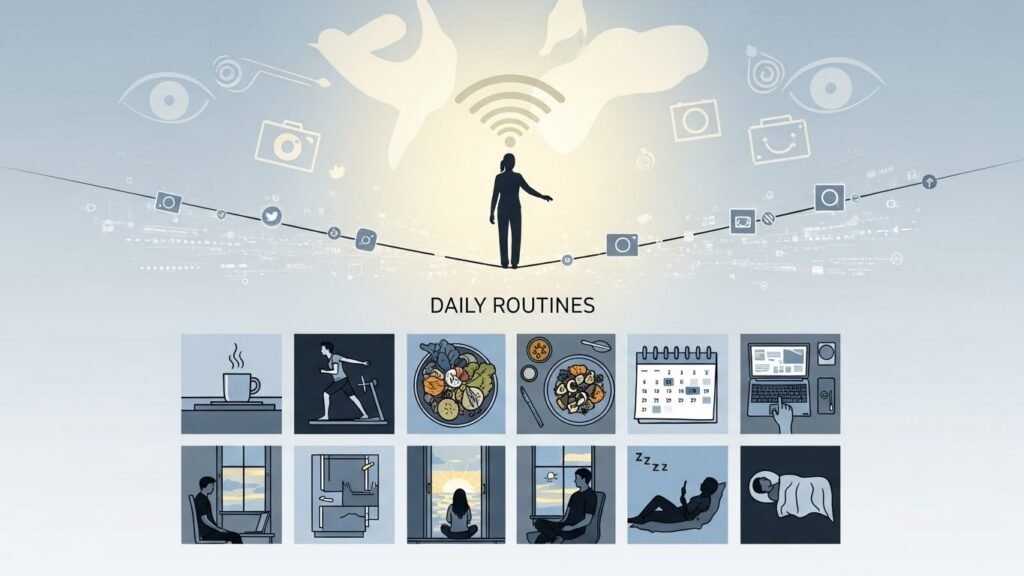
Public recognition fundamentally restructures how daily life is organized. When ordinary activities become potentially observable by strangers, the conduct of routine tasks requires different approaches than under conditions of anonymity.
Movement and Navigation
Moving through public spaces operates differently under conditions of recognition. What would otherwise be routine movement becomes potentially noticed, photographed, or interrupted. This visibility affects how travel between locations is planned and executed.
Navigation decisions involve visibility considerations that do not apply to anonymous individuals. Route selection, timing of movements, and mode of transportation may all be influenced by recognition-related factors. These considerations add complexity to otherwise simple movement decisions.
Public space usage patterns adapt to visibility conditions. Spaces where recognition likelihood is high may be avoided or approached with different preparation than spaces offering more anonymity. This adaptation affects where daily activities can comfortably occur.
Routine Activities Under Observation
Ordinary activities take on different character when conducted under potential observation. Shopping, dining, exercising, and other routine tasks become potentially public events when conducted by recognized individuals.
The awareness of possible observation affects how these activities are approached. Attention to appearance, behavior, and timing may increase when activities occur in observable contexts. This awareness represents a persistent background condition affecting routine task performance.
Some routine activities may shift to private or controlled environments specifically to avoid observation complications. What might otherwise occur in public settings may be relocated to spaces where visibility can be managed.
Time and Schedule Considerations
Time structuring under celebrity lifestyle conditions involves distinctive considerations. When and how activities are scheduled may be influenced by visibility factors alongside ordinary practical concerns.
Peak visibility periods in public spaces may be avoided when possible. Scheduling flexibility, when available, may be used to conduct activities during lower-visibility windows. These timing considerations add complexity to schedule management.
The unpredictability of recognition encounters affects time allocation. Activities may require more time than their anonymous equivalents due to potential interruptions or interaction requirements. This unpredictability must be accommodated in schedule planning.
Work-Centered Routines and Scheduling

Professional demands heavily shape celebrity lifestyle structures. Work requirements often dominate schedule organization in ways that distinguish this lifestyle from employment patterns in other fields.
Irregular Scheduling Patterns
Professional activities in recognition-oriented fields frequently involve irregular scheduling. Standard weekday work patterns often do not apply. Instead, schedules may vary dramatically based on project requirements, event timing, and professional obligations.
This irregularity affects all other aspects of lifestyle organization. When work schedules vary unpredictably, other life activities must accommodate this variability. Routine establishment becomes challenging when foundational schedule elements lack consistency.
The demands of specific professional activities drive schedule organization. Recording, performing, competing, or filming requirements create schedule imperatives that other activities must work around. Professional needs typically take priority in schedule conflicts.
Extended Work Periods
Intensive work periods characterize many professional activities in fame-generating fields. Production schedules, competitive seasons, or performance commitments may involve extended periods of high-intensity professional engagement.
These intensive periods may leave limited room for other life activities. During peak professional demands, lifestyle narrows to focus heavily on work requirements. Personal activities, relationships, and self-care may receive reduced attention during such periods.
Recovery periods may follow intensive work stretches. The lifestyle rhythm may involve alternation between high-intensity professional engagement and lower-activity recovery phases. This rhythmic pattern differs from more consistent work schedules in other fields.
Professional Preparation Requirements
Preparation for professional activities often requires significant time and resource allocation. Physical preparation, skill maintenance, material review, and other readiness activities consume substantial schedule portions.
These preparation requirements extend work time beyond visible professional activities. The actual time commitment of professional engagement exceeds what observers might assume based on visible performance durations. Preparation represents a significant but less visible lifestyle component.
Ongoing development and skill maintenance occur alongside immediate preparation needs. Continuous improvement requirements add persistent obligations that shape how time is allocated across career spans.
Privacy Limitations and Controlled Environments

Celebrity lifestyle involves distinctive privacy dynamics. The boundaries between public and private existence operate differently under conditions of widespread recognition.
Reduced Privacy Scope
The sphere of genuinely private existence contracts under celebrity lifestyle conditions. Fewer spaces, activities, and moments remain entirely free from potential observation or disclosure. This contraction represents a fundamental lifestyle characteristic.
Information that would remain private under ordinary circumstances may become subjects of public interest or disclosure. Personal matters, location information, and routine activities may all attract attention that would not occur without public recognition.
Managing information boundaries requires active effort under these conditions. Maintaining privacy involves deliberate strategies rather than naturally occurring through anonymity. This active management represents ongoing lifestyle work.
Controlled Environment Reliance
Controlled environments become important under celebrity lifestyle conditions. Spaces where access is limited and observation is managed provide contexts for activities requiring privacy.
Residences, private venues, and access-controlled locations offer refuge from public visibility. The availability and use of such spaces significantly affects quality of daily existence under celebrity lifestyle conditions.
The creation and maintenance of controlled environments requires resources and planning. Security systems, location selection, and access management all contribute to establishing spaces where privacy can be maintained.
Trust and Access Considerations
Determining who receives access to private spheres involves careful consideration. Trust becomes a significant factor in relationship management when privacy breaches carry substantial consequences.
The circles of individuals with private access may be limited compared to ordinary social patterns. This limitation affects social structure and relationship formation under celebrity lifestyle conditions.
Professional boundaries around private information become important. Those who provide services or support within private spheres may require explicit confidentiality expectations.
Travel, Appearances, and Public Commitments

Celebrity lifestyle frequently involves substantial travel and appearance obligations. These commitments shape how time is spent and where presence is required.
Travel Frequency and Nature
Professional activities often require travel to various locations. Production sites, performance venues, competitive events, and promotional activities may be distributed geographically, necessitating frequent movement.
Travel under celebrity lifestyle conditions involves distinctive logistics. Recognition at transportation hubs, accommodation requirements, and movement coordination all create complexities beyond ordinary travel planning.
The cumulative effect of frequent travel affects lifestyle stability. Establishing consistent routines becomes difficult when location changes frequently. Adaptation to changing environments becomes a recurring lifestyle requirement.
Appearance and Event Obligations
Professional commitments include appearance at various events and functions. Promotional activities, industry events, and professional gatherings require presence and participation.
These obligations extend beyond primary professional activities. Time allocated to appearances represents additional work beyond core professional functions. Managing appearance obligations requires balancing these demands against other commitments.
Preparation for appearances involves its own requirements. Appropriate presentation for public appearances requires time, resources, and often professional support. This preparation adds to the total commitment associated with appearance obligations.
Schedule Coordination Complexity
Coordinating travel and appearance schedules involves significant complexity. Multiple commitments must be sequenced, transportation arranged, and time allocated for transitions between obligations.
Professional support in schedule coordination becomes valuable under these conditions. The complexity of managing multiple commitments across locations often exceeds what individuals can effectively coordinate independently.
Schedule conflicts require resolution through prioritization and negotiation. When obligations compete for limited time, decisions about which commitments take precedence become necessary.
Professional Support Systems and Teams

Celebrity lifestyle typically involves reliance on professional support systems. Teams of specialists provide services that enable management of lifestyle complexity.
Types of Professional Support
Various professional roles contribute to celebrity lifestyle functioning. Representation, scheduling, security, logistics, and other functions may be handled by dedicated professionals. The specific team composition varies based on circumstances and needs.
These support roles address specialized requirements that arise under celebrity lifestyle conditions. Expertise in particular domains provides capabilities beyond what generalist approaches would offer.
Coordination among support professionals becomes important as team size increases. Ensuring that different functions work together effectively requires communication and management structures.
Delegation and Dependence
Many ordinary life management tasks may be delegated to support professionals. Activities that individuals typically handle independently may be assigned to others who specialize in particular functions.
This delegation enables focus on core professional activities but creates dependence on support systems. Functioning effectively becomes tied to team performance rather than individual capability alone.
The scope of delegation varies across different celebrity lifestyle situations. Some individuals maintain greater personal management of daily activities while others rely more extensively on support professionals.
Managing Professional Relationships
Relationships with support professionals require ongoing management. Communication, expectation setting, and performance assessment all factor into effective team functioning.
Trust in support professionals becomes important given their access to private information and involvement in daily functioning. Selection and maintenance of support relationships requires attention and judgment.
Turnover in support teams creates disruption requiring adaptation. When key support professionals change, adjustment periods follow as new relationships and working patterns establish.
Media Presence as a Lifestyle Factor
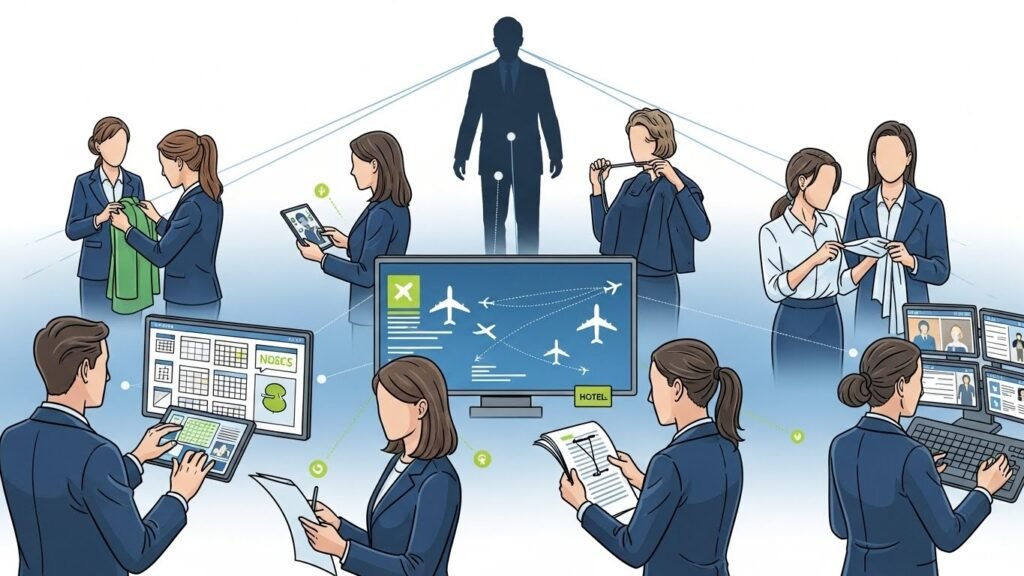
Ongoing media presence represents a distinctive element of celebrity lifestyle. The relationship with media attention shapes how life is conducted and experienced.
Persistent Media Interest
Media attention under celebrity lifestyle conditions tends to be ongoing rather than episodic. Interest in activities, statements, and circumstances continues across time rather than focusing only on specific events.
This persistent interest creates awareness of potential coverage as a background condition. Activities occur with consciousness that media attention may follow. This awareness affects behavior and decision-making.
The nature of media interest varies across individuals and circumstances. Different types and levels of attention create different lifestyle implications. However, some ongoing media relationship typically characterizes celebrity lifestyle.
Managing Media Interaction
Interaction with media involves strategic considerations. When, how, and through what channels media engagement occurs requires thought about implications and effects.
Some media interaction may be obligatory as part of professional commitments. Promotional requirements, event coverage, and contractual obligations may require specific media engagement.
Voluntary media interaction involves choices about what to share and how to present information. These choices affect public understanding and ongoing media relationships.
Digital and Social Media Dimensions
Contemporary celebrity lifestyle includes digital and social media dimensions. Online presence involves its own requirements, opportunities, and constraints.
Social media management may require ongoing attention and content creation. Platforms that enable direct audience connection also create expectations for regular engagement.
The always-on nature of digital media affects lifestyle rhythm. Unlike traditional media with defined publication schedules, digital platforms operate continuously, creating persistent presence expectations.
Psychological and Social Adjustments
Celebrity lifestyle requires various psychological and social adjustments. Living under conditions of public recognition necessitates adaptations in how individuals relate to themselves and others.
Adaptation to Recognition
Psychological adaptation to being recognized occurs over time. Initial responses to recognition experiences may differ from responses after extended periods of celebrity lifestyle conditions.
This adaptation involves developing strategies for managing recognition encounters. Approaches to interaction, boundary setting, and attention management develop through experience.
Varying comfort levels with recognition persist across individuals. Adaptation occurs but does not necessarily produce comfort. Tolerance rather than enjoyment may characterize some individuals’ relationship with recognition conditions.
Social Relationship Adjustments
Social relationships operate differently under celebrity lifestyle conditions. The dynamics of connection, trust, and interaction shift when public recognition characterizes one party.
Forming new relationships involves considerations that do not apply under anonymous conditions. Assessing motivations, managing information disclosure, and navigating power dynamics all become relevant.
Existing relationships may require adjustment to changed circumstances. Relationships formed before celebrity lifestyle conditions may need to adapt to new realities affecting the recognized individual.
Identity and Self-Concept
Living under public observation and characterization affects self-concept processes. How individuals understand themselves occurs in relationship to external perceptions and portrayals.
Managing the relationship between internal self-understanding and external characterization becomes ongoing psychological work. Maintaining grounded self-concept while receiving extensive external input presents persistent challenges.
The distinction between public and private self-experience may become more pronounced. Managing this distinction requires psychological resources and strategies.
Why Celebrity Lifestyles Are Often Misunderstood

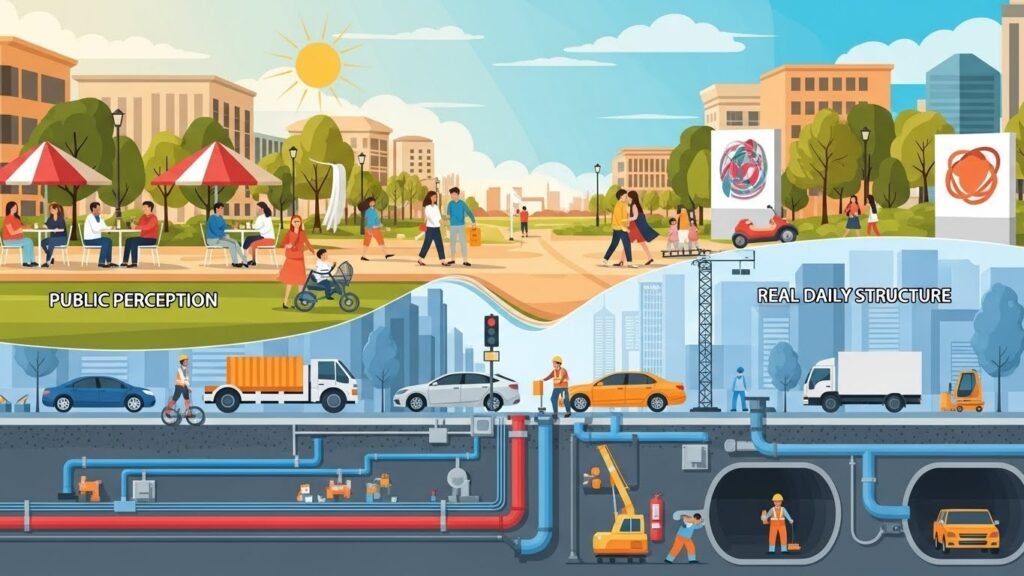
Public perception of celebrity lifestyle frequently diverges from structural reality. Several factors contribute to misunderstanding of what this lifestyle actually involves.
Visibility Bias
What is visible about celebrity lifestyle differs from its complete reality. Public observation captures some elements while missing others. This selective visibility creates distorted impressions.
Glamorous or desirable elements may be more visible than challenging or demanding aspects. The structural requirements, constraints, and difficulties of celebrity lifestyle receive less attention than consumption or leisure elements.
This visibility bias affects public understanding in ways that both overestimate and underestimate different lifestyle aspects.
Assumption of Choice
Public perception may assume that celebrity lifestyle characteristics are chosen preferences rather than structural necessities. This assumption misunderstands the constraint-driven nature of many lifestyle elements.
Security requirements, privacy limitations, and schedule demands arise from circumstances rather than preferences. Attributing these to choice rather than necessity creates misunderstanding.
The distinction between what is possible and what is freely chosen often blurs in public perception of celebrity lifestyle.
Comparison Limitations
Meaningful comparison between celebrity lifestyle and other modes of living proves difficult. The specific circumstances that shape this lifestyle lack direct parallels in ordinary experience.
Attempts to compare often emphasize material differences while missing structural distinctions. The qualitative differences in how life is organized may receive less attention than quantitative differences in resources.
Accurate understanding requires recognizing celebrity lifestyle as a distinct mode of living with its own logic rather than as an amplified version of ordinary existence.
Conclusion

Celebrity lifestyle represents a distinctive mode of daily existence shaped by public visibility, professional demands, and structural constraints. Understanding this lifestyle requires examining practical arrangements rather than focusing on consumption or material circumstances.
Public visibility restructures how ordinary activities are conducted. Movement, routine tasks, and time allocation all operate differently when potential observation becomes a persistent condition.
Work-centered organization characterizes celebrity lifestyle scheduling. Irregular patterns, intensive periods, and extensive preparation requirements distinguish professional demands in recognition-oriented fields.
Privacy operates under different dynamics than under anonymous conditions. Reduced privacy scope, reliance on controlled environments, and active information management become lifestyle necessities.
Travel and appearance obligations consume significant time and require complex coordination. Professional support systems develop to manage this complexity and address specialized requirements.
Media presence adds distinctive lifestyle dimensions. Persistent media interest and the need for strategic media management create ongoing considerations affecting daily decisions.
Psychological and social adjustments accompany celebrity lifestyle conditions. Adaptation to recognition, relationship navigation, and identity management all require ongoing attention.
Public understanding of celebrity lifestyle often diverges from reality due to visibility bias, assumptions about choice, and comparison limitations. Accurate understanding recognizes this lifestyle as a distinct mode of living shaped by specific structural conditions rather than as simply an enhanced version of ordinary existence.