
Table of Contents
Public recognition not only changes how individuals are seen by others. It also changes how individuals learn to see themselves.
The celebrity mindset refers to the psychological adaptation that develops when a person operates under sustained public visibility and social attention.

This concept explains how public-facing individuals mentally manage identity, privacy, and self-perception in environments where anonymity is no longer possible. It does not describe personality traits, daily habits, or personal behavior. Instead, it focuses on the structural mental adjustments required to function under constant recognition.
This article does not explain motivation, discipline, or performance habits.
Those mechanisms govern action.
The celebrity mindset governs identity separation and psychological survival under visibility.
It explains how individuals mentally organize themselves when their identity exists publicly.
Importantly, the celebrity mindset is not a sign of superiority, narcissism, or personal ambition. It is a functional response to living and working in a visibility-driven system.
What the Celebrity Mindset Refers To

The celebrity mindset can be understood as a cognitive framework that separates a person’s private self from their publicly recognized identity.
When individuals become widely known, their name, face, and actions begin to exist independently in public space. Over time, this separation creates a psychological requirement to manage two parallel realities:
- a private identity, experienced internally
- a public identity, experienced through media, audiences, and reputation
The celebrity mindset develops to maintain stability between these two realities.
This framework is not exclusive to entertainers. It applies to anyone whose professional life involves sustained public recognition, including performers, athletes, media figures, and other highly visible professionals.
Why a Separate “Public Self” Becomes Necessary
Public recognition introduces conditions that most people never experience at scale. These conditions include:
- loss of anonymity
- persistent observation
- external interpretation of actions
- reputation existing beyond personal control
Without mental separation, these pressures can overwhelm personal identity.
The celebrity mindset allows individuals to treat the public version of themselves as a role, rather than as their entire identity. This distinction reduces emotional overload and protects internal stability.
In simple terms, the mindset functions as psychological insulation.
Identity as a Managed Entity
A defining feature of the celebrity mindset is the perception of one’s public identity as something that must be managed, not lived spontaneously.
This does not mean dishonesty or manipulation. It reflects awareness that:
- public actions carry amplified consequences
- visibility converts behavior into symbols
- reputation functions independently of intention
As a result, individuals begin to relate to their public identity as a professional construct, similar to a role, brand, or representation.
This shift allows rational decision-making under conditions where emotional reactions would be costly.
Psychological Boundary Formation

One of the most important mechanisms within the celebrity mindset is boundary creation.
These boundaries are mental, not physical. They allow individuals to distinguish:
- what belongs to their personal life
- what belongs to public interpretation
By maintaining this separation, individuals reduce the psychological impact of criticism, praise, speculation, or attention.
Without these boundaries, public reaction can become internalized too deeply, leading to stress, anxiety, or loss of self-coherence.
Validation and Visibility

In highly visible environments, traditional sources of validation change.
For public figures, feedback often comes from:
- audience attention
- media response
- recognition metrics
The celebrity mindset does not eliminate internal validation, but it acknowledges the reality that external recognition becomes unavoidable.
Healthy adaptation involves recognizing visibility without becoming dependent on it. The mindset functions best when public validation is understood as a professional signal, not a measure of personal worth.
Unlike motivation-based frameworks, the celebrity mindset does not explain why individuals continue working.
It explains how they remain psychologically intact regardless of praise or criticism.
The Role of Legacy Thinking
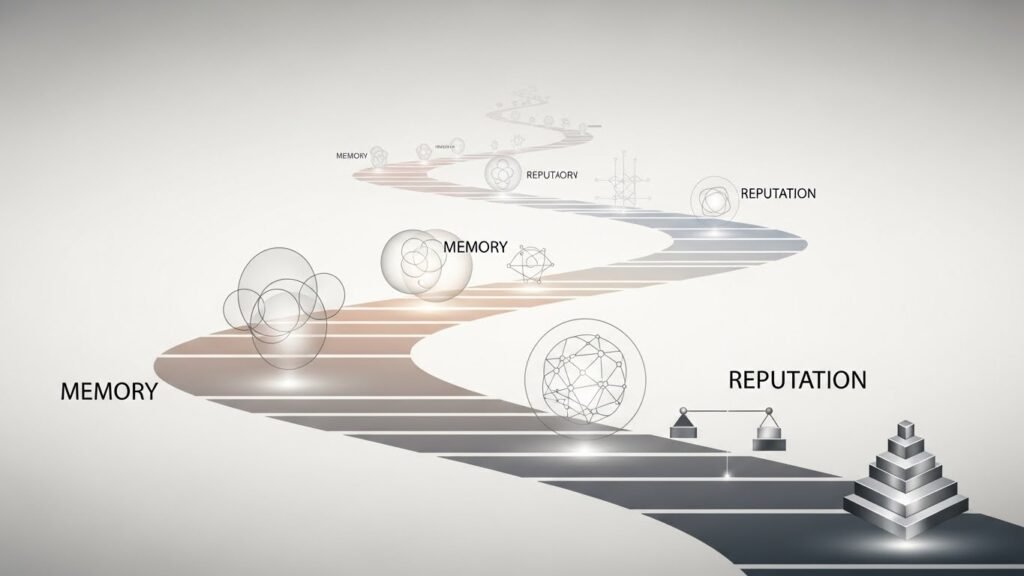
Another structural feature often associated with the celebrity mindset is long-term reputation awareness.
When actions are permanently recorded, shared, and discussed, individuals naturally begin to think in extended timelines. Decisions are evaluated not only for immediate outcomes, but also for how they may shape public memory.
This does not imply obsession with fame. It reflects awareness that public identity can outlast direct participation, creating lasting narratives.
Common Phases of Mental Adaptation
While experiences vary, many public figures move through recognizable psychological stages:
- initial discomfort with visibility
- heightened sensitivity to attention
- gradual normalization of observation
- strategic adaptation to public presence
These phases represent adjustment, not transformation of character. The mindset evolves as familiarity with visibility increases.
What the Celebrity Mindset Is Not
To avoid confusion and topical overlap, it is important to clarify what this concept does not describe.
The celebrity mindset is not:
- a personality type
- a measure of ambition or ego
- a description of habits or routines
- a form of celebrity worship
- a clinical diagnosis
It is also not equivalent to narcissism. While surface similarities may appear, the celebrity mindset is typically reactive, not pathological.
It develops because of visibility pressure, not because of pre-existing traits.
How the Celebrity Mindset Differs From Motivation and Discipline
The celebrity mindset is often confused with motivation or discipline, but these concepts operate at different psychological levels. Motivation governs why individuals continue working, while discipline regulates what behaviors are allowed or restricted under pressure.
The celebrity mindset, by contrast, does not control action or effort. It structures identity. Its primary function is to separate the private self from the publicly interpreted identity so that visibility does not destabilize internal coherence.
In high-visibility environments, individuals may remain highly motivated or disciplined yet still experience psychological strain if identity boundaries are not established. The celebrity mindset exists to manage this strain.
Unlike motivation systems that fluctuate with reward and discipline systems that enforce behavior, the celebrity mindset remains constant. It provides a stable internal framework that allows individuals to function psychologically even when public perception is volatile.
Professional Masking and Psychological Protection

Public personas function as professional interfaces. Much like uniforms or roles in other professions, they allow individuals to perform required functions without exposing their entire private identity.
The celebrity mindset supports this process by enabling controlled presentation while preserving internal psychological resources.
This separation is often essential for long-term career sustainability in recognition-based environments.
Why This Concept Matters
Understanding the celebrity mindset improves how public behavior is interpreted.
Rather than assuming inauthenticity or ego, this framework highlights adaptive mental strategies used to function under conditions most people never face.
It also explains why public behavior may appear structured, cautious, or selective without implying personal detachment or artificiality.
Conclusion
The celebrity mindset is best understood as a functional psychological adaptation to sustained public visibility.
It allows individuals to manage identity, reputation, and emotional boundaries in environments where personal actions become public symbols. By separating private self from public identity, this mindset protects psychological stability while enabling professional participation in visibility-driven systems.
This framework operates independently of productivity, ambition, or motivation systems.
It exists solely to manage psychological exposure created by public identity.
This concept does not describe who someone is as a person. It explains how individuals adapt mentally when recognition becomes an unavoidable condition of their professional reality.