
Table of Contents
Public recognition does not rely on talent alone. Sustained visibility requires a specific psychological framework that allows individuals to function under constant attention, pressure, and external evaluation. Understanding the mindset of famous people involves examining how internal control systems, cognitive discipline, and adaptive identity mechanisms operate within environments where public scrutiny is unavoidable.

Rather than focusing on personal stories or individual examples, this article explains the structural and psychological patterns that commonly emerge when people operate in high-visibility professional contexts.
The Psychological Architecture of High-Visibility Achievement
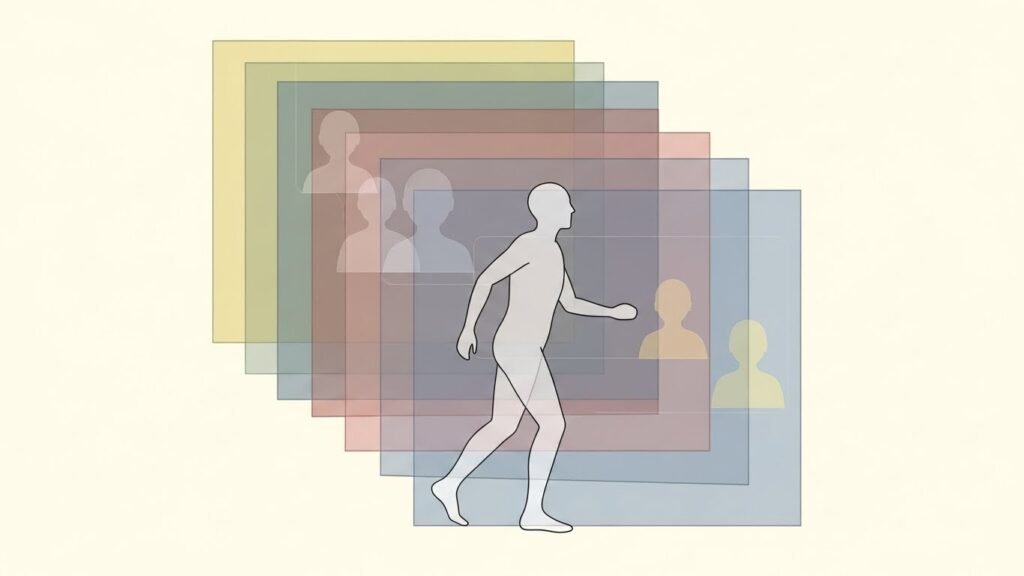
The mindset of famous people is shaped by environments where outcomes are influenced by factors beyond personal control. Media narratives, public opinion, and market dynamics introduce instability that requires deliberate mental structuring to manage effectively.
Internal Locus of Control in Public Environments
A foundational element of this mindset is the development of an internal locus of control. In practical terms, this means prioritizing personal actions, preparation, and decision-making over external reactions that cannot be controlled.

High-visibility environments amplify uncertainty. By anchoring attention to internal standards rather than public response, individuals reduce psychological dependence on praise, criticism, or attention cycles. This internal anchoring supports emotional regulation and long-term professional consistency.
Reframing Public Setbacks as Informational Signals
Another defining feature of the mindset of famous people is the ability to reinterpret public setbacks. Instead of viewing failure as a threat to identity or competence, setbacks are processed as neutral feedback.
This reframing reduces fear-based decision-making. When outcomes are treated as informational rather than personal, individuals maintain the ability to adjust strategy without emotional paralysis. This analytical orientation is essential in public environments where mistakes are visible and amplified.
Purpose-Driven Psychological Endurance
Sustained visibility places continuous demands on attention, energy, and emotional regulation. To withstand this pressure, individuals often rely on purpose-driven frameworks that extend beyond recognition itself.
A clearly defined professional purpose functions as a stabilizing reference point. When actions are aligned with long-term objectives rather than immediate validation, resilience increases and burnout risk decreases.
Core Cognitive Pillars of the Mindset of Famous People

Beyond basic stress management, the mindset of famous people is supported by several cognitive pillars that guide decision-making and resource allocation.
Goal Alignment and Value Consistency
Cognitive efficiency improves when professional goals align with internal values. Misalignment creates psychological friction, leading to indecision and exhaustion.
Individuals operating under sustained visibility tend to prioritize coherence between what they pursue and why they pursue it. This alignment reduces internal conflict and supports sustained focus despite external noise.
Clarity of Strengths and Constraints
Self-awareness plays a central role in high-visibility performance. Rather than attempting to excel in all areas, individuals benefit from understanding where their strengths generate the most impact and where limitations require structural support.
This clarity allows for strategic delegation, system-building, and focused effort. Energy is invested where it produces meaningful results rather than dispersed across incompatible demands.
Selective Attention and Time Discipline
Time functions as a finite strategic resource in public-facing careers. The mindset of famous people often involves disciplined attention management, including the deliberate rejection of secondary opportunities.
Selective attention protects cognitive capacity. By reducing unnecessary engagement, individuals preserve focus for activities that directly support professional objectives.
Adapting to Extreme Public Visibility

Visibility introduces psychological conditions that differ fundamentally from private professional environments. Adapting to these conditions requires intentional identity management.
Separation of Public Identity and Private Self
A common adaptive mechanism involves maintaining a boundary between a public professional identity and a private personal self. This separation allows individuals to interact with public feedback without internalizing it fully.
Public evaluation is directed toward a role, function, or professional representation rather than the entirety of personal identity. This distinction protects psychological stability under constant observation.
Transition From Emotional Absorption to Functional Adaptation
Early exposure to recognition can create emotional absorption, where self-worth becomes linked to attention levels. Over time, the mindset of famous people often evolves toward functional adaptation.
In this stage, visibility is treated as a professional condition rather than a personal measure. Emotional responses to attention become regulated, and practical management strategies replace reactive behavior.
Maintaining Perspective Through Cognitive Grounding
Grounding practices help counterbalance the distortions created by constant recognition. By focusing on process, craft, and effort rather than status, individuals maintain proportional self-assessment.
This grounding supports long-term psychological health and reduces the risk of identity inflation or detachment from reality.
Learnable Mental Habits Within the Mindset of Famous People

The psychological framework described is not fixed or innate. Several habits contribute to its development over time.
Continuous Learning Orientation
A persistent learning mindset supports adaptability. Regardless of experience level, individuals benefit from treating competence as expandable rather than complete.
This orientation encourages feedback integration and skill refinement, preventing stagnation in competitive public environments.
Psychological Persistence Over Extended Timeframes
Long-term visibility depends more on persistence than on initial momentum. Psychological endurance allows individuals to maintain effort during periods of reduced attention or slower progress.
This persistence supports stability across fluctuating external conditions.
Structured Goal Visualization
Visualization functions as a cognitive alignment tool rather than motivational imagery. By clarifying objectives and anticipating challenges, individuals increase readiness and strategic awareness.
Clear mental representation of goals supports consistent action without reliance on external reinforcement.
Conclusion
The mindset of famous people reflects a structured psychological adaptation to environments defined by public visibility, evaluation, and pressure. Rather than relying on personality traits or individual stories, this framework emerges from identifiable cognitive strategies and behavioral disciplines.

Internal control, purpose alignment, selective attention, and identity management form the foundation of this mindset. These elements allow individuals to function effectively under sustained recognition while preserving psychological stability.
Understanding these mechanisms provides insight into how public-facing professionals maintain performance over time. The mindset of famous people is not defined by fame itself, but by the mental structures required to operate within visibility-driven systems.