
Table of Contents
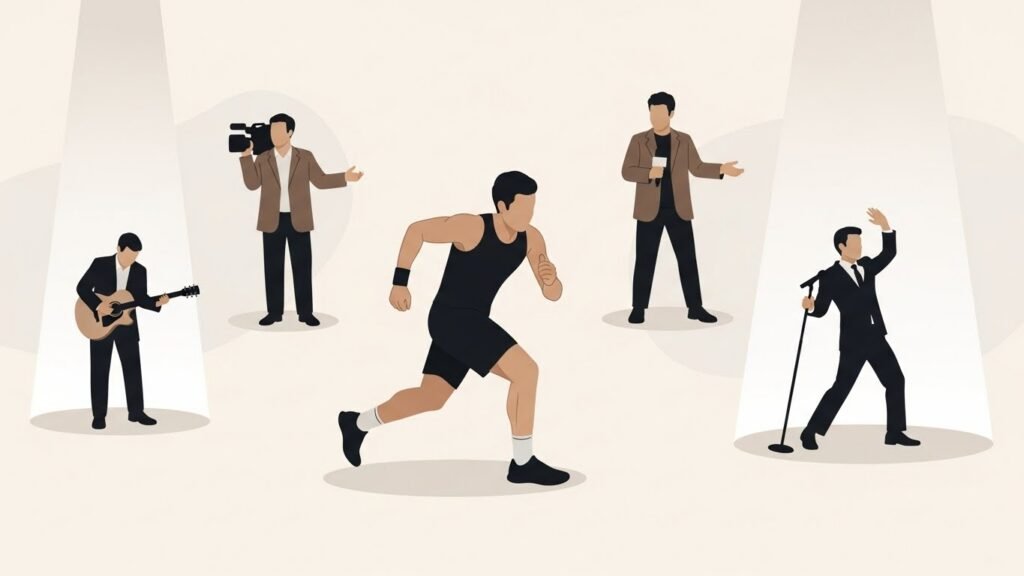
Every time a famous person steps in front of a camera or walks onto a stage, they are performing a carefully constructed version of themselves. This intentional presentation is called the public persona of celebrities, and it represents one of the most fascinating aspects of modern fame.
The public persona of celebrities goes beyond simple reputation or media coverage. It involves active construction, deliberate choices, and consistent performance of a specific identity designed for public consumption.
This guide explores how famous people intentionally craft and perform their public personas, revealing the thoughtful process behind the familiar faces we see in entertainment media.
What Is the Public Persona of Celebrities?

The public persona of celebrities refers to the intentionally constructed identity that famous people present during all public interactions. It is the character they actively perform when visible to audiences.
This concept emphasizes deliberate creation rather than passive perception. Celebrities do not simply exist in public view—they actively construct and perform specific identities for their audiences.
Think of it as professional role-playing. Just as actors become characters on screen, celebrities become specific versions of themselves when operating in their public professional capacity.
The public persona of celebrities involves conscious decisions about presentation, behavior, and communication. Every element is chosen to create a particular impression on observers.
This constructed identity serves as the interface between famous individuals and the watching world. It determines what audiences experience when they encounter celebrities through any medium.
The Difference Between Public Persona and Private Self

Understanding the distinction between performed public identity and authentic private self is essential for grasping how the public persona of celebrities actually functions.
The Performed Public Self
When celebrities appear in interviews, attend events, or post on social media, they are performing their public persona. This performance involves specific choices about what to reveal and how to present information.
The public self follows consistent patterns and meets audience expectations. It represents the celebrity as a professional entity operating within entertainment industry contexts.
This performed identity requires effort and attention. Celebrities must remember their established patterns and maintain consistency across appearances.
The Authentic Private Self
Away from public observation, celebrities exist as private individuals with unperformed identities. This private self operates without the constraints of public expectations.
The private self may share qualities with the public persona, but it is not constructed for audience consumption. It exists naturally without strategic consideration.
Family members, close friends, and trusted associates experience this authentic version. They see beyond the performance to the person underneath.
The Boundary Between Them
The line separating public persona from private self varies among celebrities. Some maintain sharp distinctions while others blur the boundaries intentionally.
Managing this boundary requires ongoing attention and energy. Celebrities must consciously transition between performed public identity and authentic private existence.
This separation protects private life from public intrusion while allowing professional functioning in visible spaces.
How Celebrities Craft Their Public Persona

The construction of the public persona of celebrities involves deliberate processes and intentional choices. Understanding these methods reveals the work behind public identity creation.
Identifying Core Identity Elements
Crafting a public persona begins with identifying which personal qualities to emphasize publicly. Celebrities select traits that serve their professional goals and resonate with target audiences.
This selection process requires self-awareness and strategic thinking. Famous people must understand both themselves and their audiences to make effective choices.
Not every genuine quality translates well to public performance. Some authentic traits enhance public persona while others might create confusion or disconnect.
Developing Consistent Patterns
Once core elements are identified, celebrities develop consistent patterns for expressing them. These patterns become recognizable signatures that audiences learn to expect.
Consistency requires practice and discipline. Maintaining established patterns across varied situations and over extended time periods demands ongoing attention.
These patterns extend across all public contexts. Whether in interviews, on social media, or at events, the same core identity elements should appear consistently.
Refining Through Practice
Public personas improve through repeated performance. Each public appearance provides opportunity to refine and strengthen the constructed identity.
Early public appearances often feel less polished than later ones. Celebrities learn what works through experience and adjust their performances accordingly.
Feedback from audiences, media coverage, and professional advisors helps guide refinement. The public persona of celebrities evolves toward greater effectiveness over time.
Adapting to Different Contexts
Skilled celebrities adapt their public persona presentation to different contexts while maintaining core consistency. They emphasize different elements depending on the situation.
A talk show appearance might emphasize humor while a serious interview highlights thoughtfulness. The underlying identity remains consistent even as emphasis shifts.
This adaptability demonstrates sophisticated persona management. It keeps public identities fresh while maintaining recognizable foundations.
Key Elements of a Constructed Public Persona

Several specific elements combine to create the public persona of celebrities. Each component requires intentional attention and consistent execution.
Verbal Communication Style
How celebrities speak significantly shapes their public persona. Word choice, sentence structure, vocabulary level, and speaking rhythm all contribute to constructed identity.
Some celebrities develop distinctively casual speaking patterns. Others cultivate articulate, formal communication styles. These choices communicate different identity messages.
Consistency in verbal style reinforces persona stability. Audiences become familiar with how specific celebrities express themselves verbally.
Physical Presentation
Visual elements powerfully shape public persona construction. Clothing, grooming, posture, and physical behavior all communicate identity to observing audiences.
Celebrities often develop signature visual elements that become persona identifiers. Consistent aesthetic choices create immediate recognition.
Physical presentation extends to movement and gesture. How celebrities physically occupy space during public appearances contributes to persona perception.
Behavioral Patterns
Observable behavior patterns define public persona significantly. How celebrities treat others, handle challenges, and respond to situations reveals constructed identity.
Courteous, gracious behavior patterns create warm public personas. Intense, focused patterns suggest different identity characteristics.
These behavioral patterns must remain consistent across contexts. Audiences notice when behavior contradicts established persona patterns.
Expressed Opinions and Values
The opinions celebrities share publicly become persona elements. Their expressed views on various topics shape how audiences understand their constructed identities.
Celebrities strategically choose which opinions to share and which to withhold. Every expressed position becomes part of their public persona record.
Consistency in expressed values reinforces persona credibility. Contradictory statements across different appearances create confusion and weaken constructed identity.
Examples of Public Personas Across Industries
The public persona of celebrities takes different forms across entertainment industries. Examining these variations reveals how professional context shapes identity construction.
Actors and Performers
Film and television actors construct public personas separate from the characters they portray professionally. Their public identity exists independently of their artistic roles.
Some actors build personas emphasizing artistic seriousness and creative dedication. They present themselves as thoughtful craftspeople committed to meaningful work.
Others construct approachable, entertaining personas focused on audience connection. Their public identities emphasize humor, warmth, and accessibility.
The challenge for actors involves maintaining persona consistency while regularly portraying diverse fictional characters. Audiences must distinguish between performed roles and public identity.
Musicians and Recording Artists
Musicians often construct public personas closely aligned with their artistic output. Their public identities reinforce and extend the emotional content of their music.
Some musicians build theatrical public personas that function almost as artistic characters. These constructed identities become inseparable from their creative work.
Others emphasize authenticity in their public personas, presenting themselves as genuine artists sharing personal truth. This approach connects public identity to perceived artistic honesty.
Genre conventions influence musician public persona construction. Different musical styles carry different expectations for artist presentation and behavior.
Athletes and Sports Figures
Professional athletes construct public personas within competitive sporting contexts. Their public identities typically emphasize qualities associated with athletic excellence.
Dedication, discipline, and competitive drive frequently appear in athlete public personas. These qualities align with expectations for professional sports figures.
Some athletes construct personas extending beyond athletic achievement. They incorporate humor, social awareness, or entertainment skills into their public identities.
The physical nature of athletic performance influences persona construction. Athletes must integrate their bodily performance with their verbal and behavioral presentation.
Television Hosts and Presenters
Television personalities construct public personas designed for regular audience interaction. Frequent visibility requires particularly consistent identity performance.
Warmth, reliability, and approachability typically characterize host personas. Audiences who encounter these celebrities regularly expect comfortable familiarity.
The live or live-to-tape nature of much television work requires confident persona performance. Hosts must maintain their constructed identities under real-time pressure.
Why Public Personas Are Consistent and Strategic

The public persona of celebrities maintains consistency and follows strategic logic for important reasons. Understanding this consistency reveals the professional nature of public identity.
Audience Expectations
Audiences develop expectations based on previous encounters with celebrity public personas. Meeting these expectations satisfies audiences and maintains connection.
Unexpected departures from established patterns confuse and potentially alienate audiences. Consistency protects the relationship between celebrities and their followers.
These expectations build over time through repeated exposure. Each consistent appearance reinforces audience understanding and strengthens expectations.
Professional Requirements
The entertainment industry expects celebrities to maintain stable public identities. This expectation influences career opportunities and professional relationships.
Industry professionals rely on celebrity consistency when making business decisions. Unpredictable public identities create professional uncertainty and risk.
Meeting industry expectations requires disciplined attention to persona maintenance. Celebrities who ignore consistency often face professional consequences.
Brand Functioning
Modern celebrities function as brands within entertainment marketplaces. Consistent public personas allow proper brand functioning and positioning.
Brand partnerships require predictable celebrity identities. Companies need assurance that celebrity associations will remain stable and aligned with their products.
Strategic consistency enables long-term brand development. Celebrity identities that shift unpredictably cannot build lasting brand value.
Identity Coherence
Human psychology expects identity coherence from individuals. Radically inconsistent behavior patterns trigger suspicion and discomfort.
Consistent public personas satisfy fundamental psychological needs for stable identity perception. Audiences feel comfortable with celebrities who seem coherent.
This coherence requirement extends across all visible contexts. The public persona of celebrities must remain recognizable whether in interviews, at events, or on social media.
How Audiences Interpret Public Personas

Understanding how audiences receive and process the public persona of celebrities reveals the other half of identity construction dynamics.
Pattern Recognition
Audiences automatically identify patterns in celebrity presentation over time. Repeated exposure teaches audiences what to expect from specific famous individuals.
These recognized patterns become mental models for understanding celebrities. Audiences interpret new information through the lens of established patterns.
Strong, clear patterns create more effective audience interpretation. Muddled or inconsistent presentation confuses audience understanding.
Parasocial Relationships
Audiences develop one-sided relationships with celebrities based on public persona exposure. These parasocial connections involve genuine emotional investment.
The constructed public persona serves as the basis for these relationships. Audiences believe they know celebrities through accumulated persona exposure.
These relationships motivate audience behavior including consumption, advocacy, and loyalty. Public personas that generate strong parasocial connections create valuable audience bonds.
Authenticity Judgments
Audiences continuously evaluate whether public personas seem genuine. They assess whether constructed identities appear authentic or artificial.
Personas perceived as authentic generate stronger audience connection. Transparency and apparent honesty enhance authenticity judgments.
However, audiences accept some construction as normal and expected. They understand that public contexts require some degree of intentional presentation.
Emotional Responses
Public personas trigger emotional responses in audiences. The specific characteristics of constructed identities determine what emotions audiences experience.
Warm, friendly personas generate affection and comfort. Intense, passionate personas inspire admiration or excitement. Different constructions produce different emotional results.
These emotional responses drive audience engagement and loyalty. Celebrities whose personas generate positive emotions build stronger audience relationships.
The Role of Performance in Public Personas

The public persona of celebrities involves ongoing performance. Understanding this performative dimension reveals the active nature of public identity.
Continuous Performance Requirements
Public persona maintenance requires continuous attention during all visible moments. Celebrities must remain in character whenever audiences might observe them.
This continuous performance demands energy and focus. The effort involved in sustained identity performance should not be underestimated.
Breaks from performance happen only in genuinely private spaces. Any potentially observable moment requires persona engagement.
Performance Skills Development
Effective public persona performance requires skill development over time. Celebrities improve their performance abilities through practice and experience.
Early career appearances often show less refined performance skills. Veterans demonstrate smoother, more natural-seeming persona execution.
These performance skills become professional assets. Celebrities with strong performance abilities navigate public situations more effectively.
Balancing Spontaneity and Control
Skilled performers balance spontaneous moments with controlled presentation. Appearing too scripted reduces authenticity perception while excessive spontaneity risks persona inconsistency.
This balance requires sophisticated judgment in real-time situations. Celebrities must decide moment by moment how to navigate between control and naturalness.
The most effective public personas feel natural despite underlying construction. Audiences should not feel they are watching obvious performance.
Conclusion
The public persona of celebrities represents a fascinating intersection of identity, performance, and professional strategy. Famous people actively construct and perform specific versions of themselves for public consumption.
This construction involves deliberate choices about communication style, physical presentation, behavioral patterns, and expressed values. Each element contributes to a coherent public identity designed for audience connection.
The public persona of celebrities differs meaningfully from private authentic selves. This separation protects private life while enabling professional functioning in visible spaces.
Consistency and strategic thinking characterize effective public personas. Celebrities maintain stable identities to meet audience expectations, satisfy industry requirements, and build lasting professional brands.
Audiences interpret public personas through pattern recognition, parasocial relationships, authenticity judgments, and emotional responses. These interpretation processes determine how effectively constructed identities connect with their intended audiences.
Understanding the public persona of celebrities helps us appreciate the complexity behind familiar famous faces. Every public appearance involves performance, construction, and strategic identity management that deserves recognition as genuine professional skill.
As entertainment media continues evolving, the importance of constructed public identity will only increase. The public persona of celebrities will remain central to how fame functions and how audiences relate to the famous individuals who capture our attention.